Securing a dependable pest control service in Long Beach requires addressing constant marine moisture, dense coastal street layouts, and intense urban-wildland pest pressures. From sudden Argentine ant intrusions marching into California Heights kitchens during severe July Santa Ana wind spikes to drywood termite swarms targeting Spanish revival rafters near Alamitos Beach, residential properties demand measured, scientific perimeter barriers and durable physical exclusions.

A professional pest control service in Long Beach is an integrated mechanical, physical, and targeted chemical property defense intervention that identifies, eradicates, and continuously excludes wood-destroying insects, synanthropic rodents, and invasive structural pests from residential framing, foundations, and surrounding grounds.
Every service reflects the same meticulous attention to detail, whether it's a single job or a larger pest control service project across Long Beach.
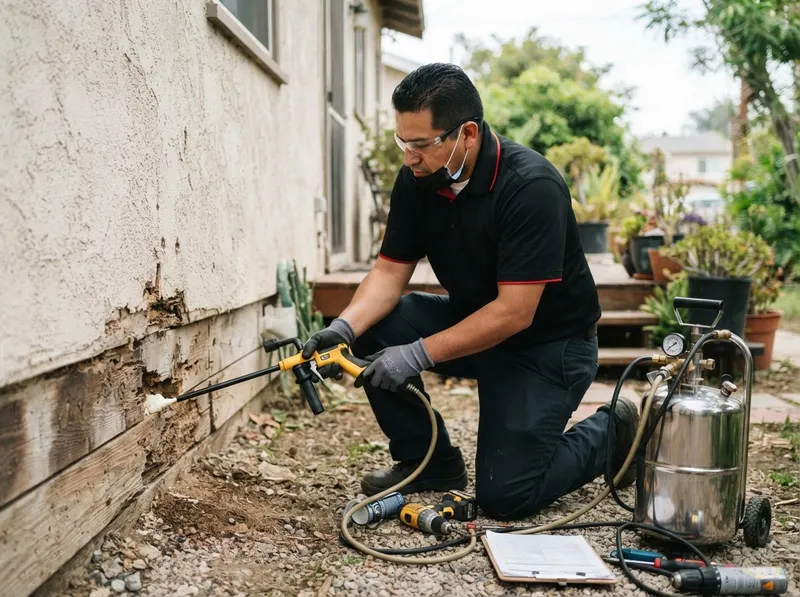
Complete termite eradication addresses both soil-based subterranean colonies and airborne drywood infestations that compromise structural timber throughout coastal Los Angeles County. Treatment protocols begin with full attic and sub-area crawlspace timber sounding to locate hollowed structural framing, termite kickout holes, and frass accumulations. For drywood infestations contained within isolated structural timbers, technicians inject non-repellent liquid or borate-based wood preservatives directly into drilled structural galleries under 40 PSI pressure, sealing drill ports with matching wood dowels upon completion. When widespread drywood termite activity infests concealed roof truss connections and wall framing beyond visual access, whole-structure structural fumigation delivers sulfuryl fluoride gas across the entirety of the building envelope, penetrating closed wall cavities over a strict 48-hour exposure cycle. For subterranean colonies emerging from moist ground soils, technicians excavate a 6-inch by 6-inch trench along exterior perimeter foundation footings, applying liquid termiticide at a calibrated rate of four finished gallons per ten linear feet, and pressure-injecting concrete patio slabs using hollow core-drill bits spaced twelve inches apart to establish an uninterrupted chemical defense zone.
Get a quote →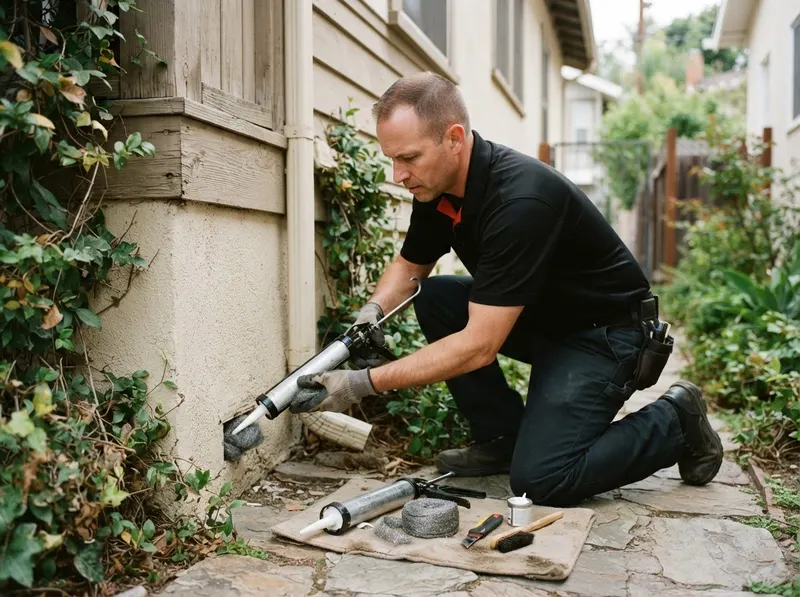
Physical rodent remediation eliminates active attic populations and closes structural vulnerable points against invasive roof rats, Norway rats, and house mice. Service begins with an exhaustive 36-point exterior roofline, foundation, and crawlspace audit to identify entry portals as narrow as one-quarter inch. Technicians clean out entry zones and permanently secure dormer returns, louvered gable vents, open rafter tails, and crawlspace access frames using heavy twenty-gauge quarter-inch hot-dipped galvanized hardware cloth secured with corrosion-resistant mechanical fasteners. Exterior air-conditioning refrigerant chases and plumbing penetrations receive industrial-grade copper mesh packing topped with elastomeric expanding foam to prevent gnawing. Inside structural attics, drop-ceiling cavities, and subfloors, technicians set extensive runs of high-tension wooden snap traps baited with non-perishable attractants, positioned perpendicularly along structural travel beams and wall plates. Follow-up visits over a ten- to fourteen-day window allow for retrieval of captured rodents, re-tensioning of monitoring lines, and air-movement testing across sealed portals until three consecutive inspections confirm zero attic activity.
Get a quote →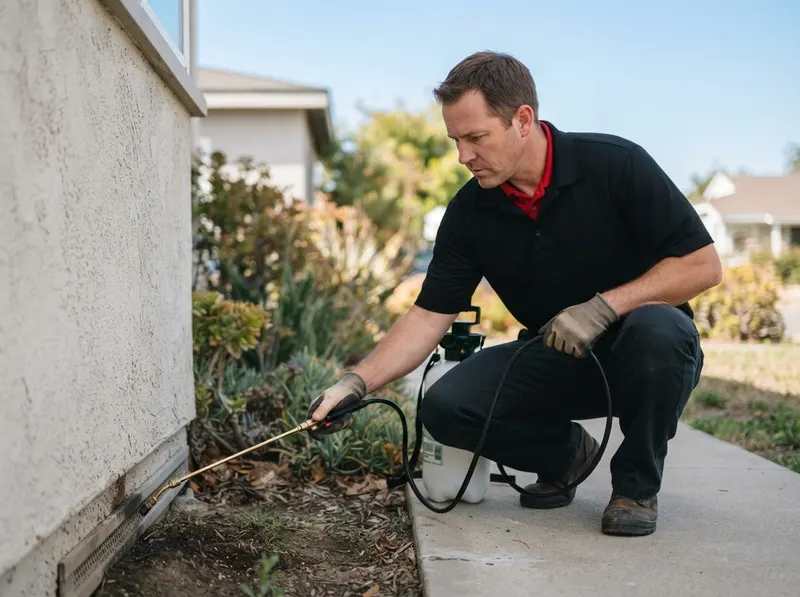
Invasive ant management stops the rapid influx of destructive multi-queen Argentine ant and odorous house ant colonies drawn inward during dry seasonal conditions. Because Argentine ants maintain supercolonies containing millions of foraging workers and thousands of reproductive queens, conventional over-the-counter pyrethroid sprays induce colony budding, splitting one infestation into three distinct kitchen colonies. Professional management deploys sophisticated, non-repellent liquid transfer agents applied as a low-pressure coarse fan spray along the continuous exterior foundation perimeter, extending three feet upward and three feet outward across adjacent soil, mulch, and hardscape borders. Foraging ants traverse the invisible liquid barrier, unwittingly collecting the slow-acting active ingredient on their tarsi and epicuticle before returning to subterranean satellite nests, transferring the compound through mutual grooming and food sharing over a seven-to-ten-day period. Technicians supplement exterior perimeter liquid applications with targeted carbohydrate- and protein-rich gel baits placed directly inside interior wall voids, electrical faceplates, and behind plumbing escutcheon plates where moisture lines concentrate.
Get a quote →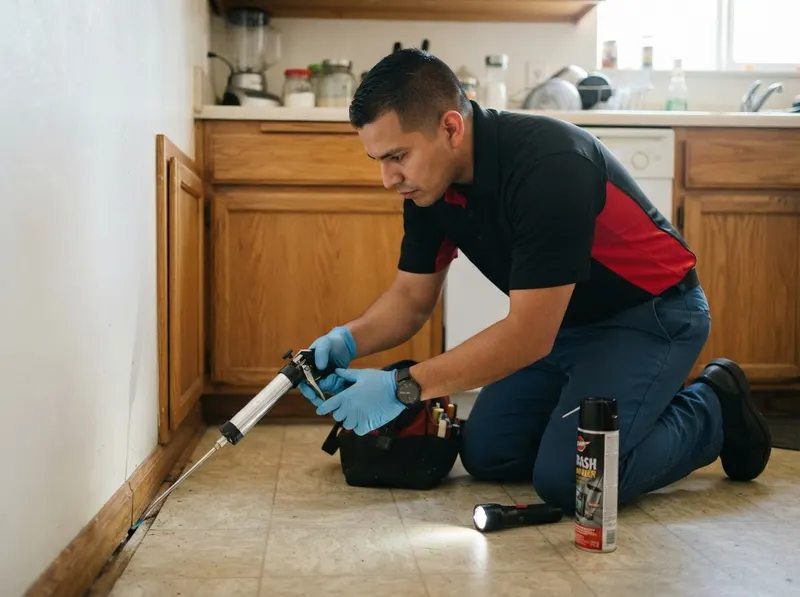
Targeted cockroach control resolves both high-density indoor German cockroach infestations in kitchens and bathrooms and exterior American cockroaches migrating upward from municipal sewer channels. For German cockroach cleanouts, technicians perform thorough physical flushing and vacuum extraction of structural crevices, behind stove ranges, refrigerator compressor coils, and beneath cabinet undermounts using HEPA-filtered equipment to drop breeding population volume immediately. Specialists then apply micro-droplets of non-repellent, highly palatable insecticidal gel bait containing abamectin or indoxacarb along cabinet hinge plates, counter seams, and wall baseboard corners, rotating chemical modes of action every ninety days to prevent behavioral bait aversion. To break the reproductive cycle, technicians incorporate broad-spectrum insect growth regulators that disrupt juvenile chitin synthesis, rendering nymphal stages sterile and incapable of producing viable oothecae. For large American cockroaches infiltrating through foundation weep holes and basement access doors, technicians apply high-expansion insecticidal bio-foam into interior plumbing floor drains, install drain gasket seals, and lay granular water-resistant perimeter baits around sewer cleanout caps and exterior perimeter planter beds.
Get a quote →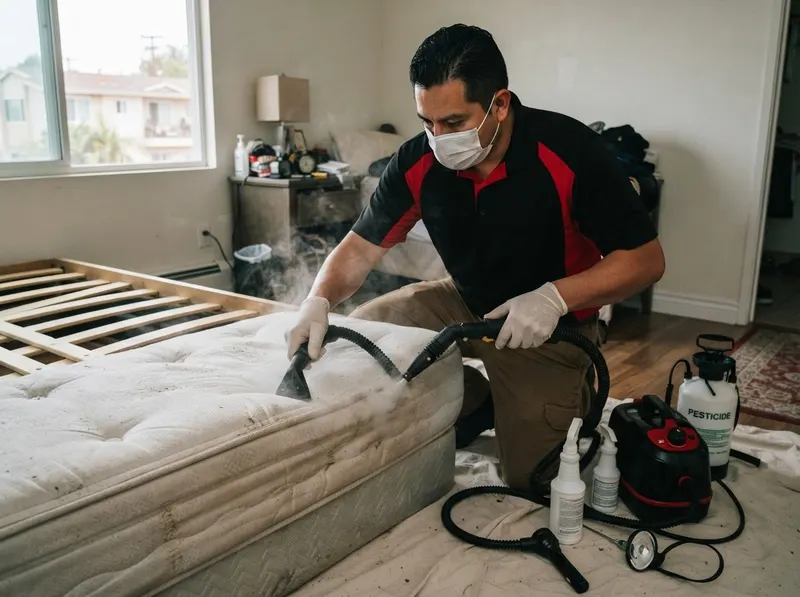
Bed bug elimination eradicates blood-feeding Cimex lectularius colonies from residential bedrooms, upholstered furniture, and concealed structural wall voids without spreading insects to adjacent rooms. Initial diagnostics utilize high-output LED inspection lights and fine extraction probes to examine mattress piping, box spring internal frames, headboard mounting plates, picture frame backings, and the gaps behind room baseboard trims. Technicians execute a multi-tier remediation protocol utilizing high-temperature dry steam applied at 180 degrees Fahrenheit directly onto mattress seams and furniture framing to induce contact thermal mortality of both adult bugs and protected eggs. Technicians follow thermal applications with precision crack-and-crevice injections of dual-action synthetic insecticides combined with micro-encapsulated residual suspensions and long-lasting insect growth regulators along carpet tack strips, wall-to-floor junctions, and electrical outlet junction boxes. Technicians also install full zippered mattress encasements to seal existing mattress cores and place smooth-walled interception cups beneath all bed posts to monitor and confirm zero insect mobility over a thirty-day post-treatment observation period.
Get a quote →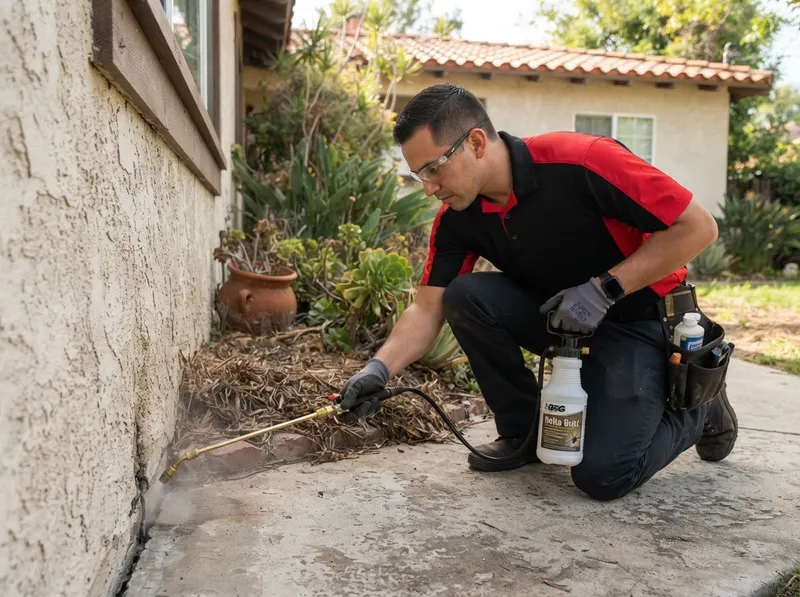
Targeted arachnid management eliminates venomous Western black widows and pervasive structural web-building spiders from home perimeters, garages, and exterior eaves. The service protocol initiates with mechanical de-webbing utilizing extendable carbon-fiber brushes to clear exterior soffits, window surrounds, entry porticos, patio framing, and utility meters, which strips spiders of their structural hunting webs and physically collects protective silk egg sacs before hatching occurs. Following mechanical cleaning, technicians apply micro-encapsulated wettable-powder residual formulations to exterior architectural eaves, decorative stucco bands, structural foundation corners, and along the sheltered perimeters of garage storage walls. Because spiders do not groom themselves like social insects, standard non-repellent liquid chemistries are ineffective; micro-encapsulated suspensions adhere directly to the spider's lower legs as they navigate treated vertical stucco surfaces, allowing the active ingredient to penetrate the cuticle. In exterior landscape perimeters, specialists inspect and spot-treat stacked landscape pavers, irrigation valve boxes, dry-stacked stone walls, and exterior deck undersides where black widows habitually construct irregular, high-strength ground webs.
Get a quote →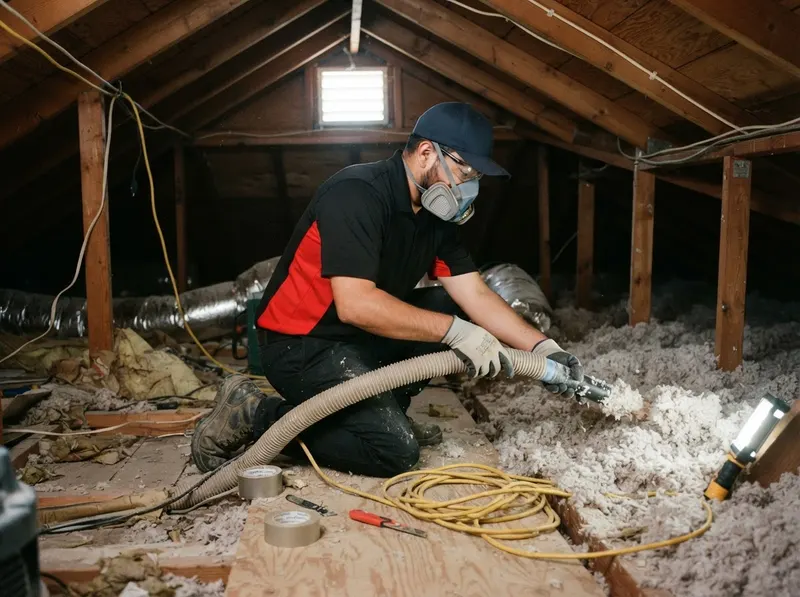
Complete attic restoration remediates severe biological damage caused by protracted rodent and bird roosting activity within residential ceiling structures. The remediation protocol starts with isolating the home interior beneath the attic scuttle using heavy 6-mil polyethylene plastic drop containment and establishing negative air pressure with industrial HEPA air scrubbers venting directly outdoors to prevent airborne particulate contamination. Technicians deploy high-powered commercial vacuum systems operating outside the building envelope to extract crushed, urine-soaked cellulose, blown fiberglass, and fecal deposits directly through sealed six-inch flexible ducting straight into disposal containment trailers. Following complete waste removal down to the bare wooden ceiling joists, specialists treat all exposed ceiling framing, wall top-plates, and structural framing members with an atomized hospital-grade broad-spectrum enzyme biocide to neutralize hantavirus, roundworm eggs, and persistent rodent pheromone scent trails that attract outside colonies. Technicians seal all exposed electrical conduit and ceiling drywall penetrations with expanding fire-block polyurethane foam before blowing in clean, high-performance borate-treated cellulose insulation up to a thermal resistance value of R-38.
Get a quote →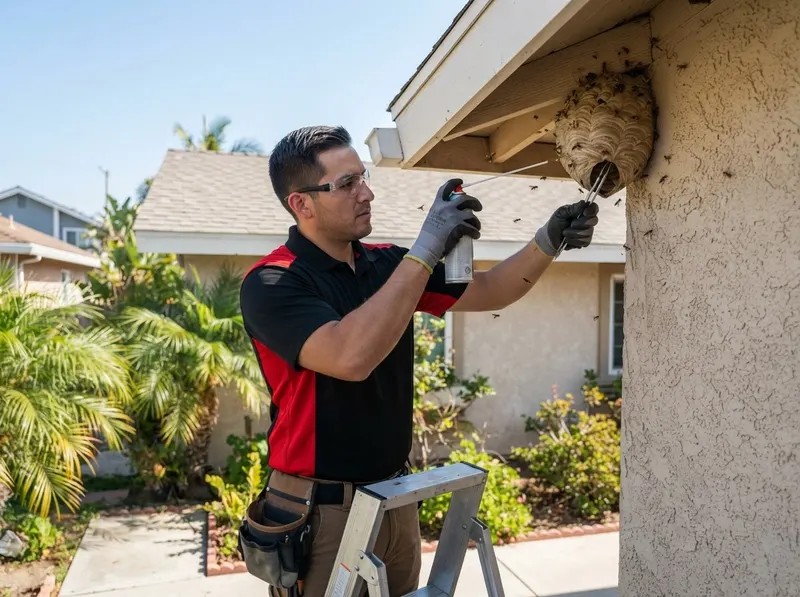
Stinging insect management removes aggressive paper wasp, yellowjacket, and European honeybee colonies nesting under exterior building eaves, roof overhangs, attic louvers, and structural landscape elements. Technicians assess nest architectural structure, flight vectors, and hive aggressiveness before deploying direct contact freezing agents and high-reach pneumatic dusting apparatus to neutralize defensive sentry wasps instantly. For visible exterior aerial paper wasp nests attached along residential fascia boards and second-story roof valleys, technicians spray pressurized targeted knockdown formulations that penetrate the open paper comb cells within three to five seconds, preventing defensive swarming before manually shearing the nest structure from the building framing. For subterranean ground yellowjacket colonies nesting inside abandoned rodent burrows or decorative stone landscaping, technicians introduce long-lasting insecticidal dusts deep into primary entry tunnels, sealing secondary venting holes to ensure total colony saturation down to the subterranean brood cells. Following physical nest extraction, technicians wash the attachment point with enzyme cleaning formulations to break down residual pheromone footprints that entice returning foragers to rebuild nests in the exact same location.
Get a quote →You get a firm, itemized quote for your pest control service before any work begins, no surprises, no pressure.
Careful prep, tidy work, and a full cleanup when we are done. We treat your home and belongings like our own.
The same trusted, background-checked team from the first call to the final check.
Selecting appropriate intervention protocols depends strictly on target pest biology, home architectural era, foundation construction type, and the physical extent of biological damage. If an active subterranean termite colony creates mud shelter tubes along raised concrete foundation stems or subterranean crawlspaces near historic Rancho Los Cerritos, choose a continuous liquid termiticide soil injection or perimeter trenching application; if drywood termites infest exposed structural ceiling joists, door casings, or rafter tails in a historic multi-story Craftsman home in Rose Park, choose whole-structure structural fumigation or targeted, high-pressure localized wood injection. The trade-off between localized wood injection and structural fumigation involves immediate single-room convenience without home evacuation versus whole-envelope eradication that requires structural tenting, bagging pantry foods, and vacating the residence for 48 to 72 hours.
If roof rats exploit utility wire drop lines, dense bougainvillea vines, or overgrown Canary Island date palms near Naples canals to enter attic spaces, choose mechanical rodent exclusion involving twenty-gauge, quarter-inch galvanized steel wire mesh, poly-foam void fillers, and exterior chimney cap screening; if house mice run subfloor plumbing chases and cabinet kickboards in post-war tract homes around Los Altos, choose interior snap-trapping runs paired with selective exterior grade-level foundation sealing. The trade-off between complete exterior mechanical exclusion and recurring perimeter bait station servicing balances an upfront structural carpentry investment against long-term operational maintenance costs that manage surrounding neighborhood pest pressure without permanently closing structural voids. If Argentine ants invade kitchen quartz countertops and bathroom drains during triple-digit inland heat waves, choose non-repellent transfer chemistry such as fipronil exterior bands that foraging workers carry back to eliminate subterranean queens; if an unmanaged residential yard bordering El Dorado Park Estates harbors dense wolf spiders, field crickets, and European earwigs, choose a broad-spectrum exterior barrier band applied three feet up the exterior masonry foundation and three feet outward onto perimeter landscape beds.
The trade-off between non-repellent transfer chemistry and fast-acting repellent pyrethroid sprays balances colony-level eradication over seven to fourteen days against instant exterior contact knockdown that risks splitting multi-queen ant colonies deeper into interior partition walls. If American cockroaches emerge from municipal storm drains and sewer lateral connections into historic basement spaces along Wrigley, choose insect growth regulator bait foams and mechanical drain trap seals; if German cockroaches establish an active presence in cabinet hinges, refrigerator motor pans, and wall electrical boxes following a tenant transition, choose multi-stage interior crack-and-crevice gel baiting coupled with localized vacuum extraction. The trade-off between baiting programs and heavy aerosol flushing balances sustained, non-disruptive population collapse against immediate adult knockdown that leaves sheltered egg oothecae intact inside structural voids.
Every project gets a firm, written price after a free on-site visit. Ranges below for orientation.
Tell us about your pest control service job and we'll send a clear, written quote, usually the same day. Or just call and talk to a real Long Beach pro.
(562) 473-5423
Long Beach residential structures endure a distinct clash of coastal microclimates, historic framing styles, and marine moisture gradients that dictate localized pest movements. In waterfront enclaves like Naples and the Peninsula, properties face relentless subterranean humidity driven by tidal shifts along Alamitos Bay, creating prolonged damp-wood conditions that accelerate subterranean termite colony tunneling beneath concrete foundations and flagstone patios. Across the historic Craftsman bungalows of Rose Park and Spanish revival residences in California Heights, aged Douglas fir structural lumber and decorative exposed exterior rafter tails provide prime entry points for airborne drywood termite swarms that coincide with late summer Santa Ana wind spikes. Further inland along Bixby Knolls and Los Altos, mature street-lining Canary Island date palms and sprawling urban tree canopies form elevated rodent highways, permitting invasive roof rats to travel across overhead electrical utility drops directly onto tile roofs, bypassing ground barriers entirely. During the sustained inland heat waves of July through September, the dry, parched soil of eastern neighborhoods bordering El Dorado Nature Center drives subterranean Argentine ant supercolonies toward residential plumbing chases, producing rapid kitchen invasions that require non-repellent transfer chemistry rather than generic repellent perimeter sprays.
Free estimates for Long Beach & the surrounding area.
 Crossroad Pest Control