Older architectural footprints in Long Beach neighborhoods like California Heights, Wrigley, and Rose Park predominantly feature raised-foundation structures sitting over open crawlspaces. Elevated coastal air from the…
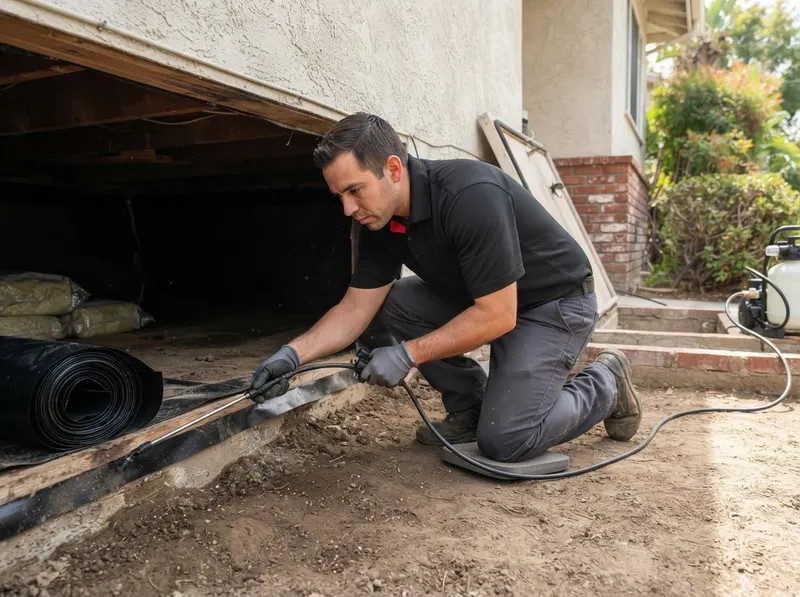
Older architectural footprints in Long Beach neighborhoods like California Heights, Wrigley, and Rose Park predominantly feature raised-foundation structures sitting over open crawlspaces. Elevated coastal air from the Pacific and seasonal morning marine layers deposit persistent humidity directly into sub-floor soils. When crawlspace soil moisture exceeds 15% moisture content, wood framing absorbs that ambient dampness, which invites subterranean termites and oriental cockroaches into the porous crawl voids below floorboards. Unmanaged crawlspaces allow pests to establish primary colonies within crawl soil, ultimately forcing insects up through pipe penetrations into bathrooms and kitchens.
Sub-Area Moisture and Crawlspace Perimeter Defense resolves these subterranean habitats through systematic structural remediation. The protocol begins with clearing organic detritus and inspecting perimeter sill plates, post supports, and vent screens for breaks that permit insect transit. Technicians spread high-durability polyethylene soil barriers across exposed dirt to arrest ground-evaporation moisture while treating foundational crawl perimeters using non-repellent, low-odor liquid products. This approach isolates damp ground conditions without generating synthetic fumes that could drift through sub-floor registers into main living spaces.
Deciding between an interior crawlspace moisture defense and an exterior-only perimeter spray depends directly on home foundation construction. Concrete slab constructions found in portions of Los Altos and El Dorado Park Estates rely entirely on exterior trench barriers. In contrast, standard Craftsman or Spanish revival structures in Belmont Shore, Naples, and Alamitos Beach depend entirely on crawlspace access for sub-floor defense; selecting exterior applications alone leaves subterranean moisture voids completely untreated, allowing hidden structural colonies to breed underneath living areas. The trade-off centers on crawl accessibility versus complete structural enclosure: homes with low clearance sub-floors require specialized horizontal application tools rather than simple exterior ground drenching.
The sequential defense process proceeds across three systematic stages: 1. Technicians gauge underlying structural wood moisture using calibrated pin meters and inspect concrete foundation blocks for mud tubes. 2. Staff install moisture containment barriers over dirt foundations and secure high-gauge mesh over foundation crawl vents to block insect reentry. 3. Technicians inject targeted, non-repellent barrier formulations into perimeter trench lines, ensuring long-term barrier continuity without aggressive lingering indoor chemical odors.
Every job gets a firm, written price after a free on-site visit.
Tell us about your sub-area moisture and crawlspace perimeter defense job in Long Beach and we'll send a clear, written quote, usually the same day.
 Crossroad Pest Control